
Heritage Grains
Documented information on ancient wheat varieties — einkorn, emmer, spelt, and khorasan — cultivated across Canadian growing regions, and the stone-milling traditions that produce whole grain flour from them.
Grains documented on this site
Einkorn, emmer, and spelt predate modern bread wheat by thousands of years. Several Canadian farms — particularly in Saskatchewan, Manitoba, and British Columbia — have reintroduced these varieties as interest in whole grain baking and nutritional transparency has grown over the past two decades.
Read the Heritage Grain OverviewRecent Articles


Grain Profiles

A hulled wheat grown across Europe for centuries. In Canada, spelt cultivation has expanded in Ontario and Alberta. Its husk protects the kernel through harvest, reducing chemical inputs required.
One of the first domesticated crops, originating in the Fertile Crescent roughly 10,000 years ago. Emmer produces a dense, nutty flour well-suited to pasta and rustic breads. Several Quebec farms currently grow certified emmer.
The most primitive domesticated wheat, carrying only 14 chromosomes compared to modern bread wheat's 42. Canadian einkorn growing remains limited but is tracked by the Organic Federation of Canada as interest grows.

Known commercially as KAMUT®, khorasan wheat produces large amber kernels with a buttery flavour. It is grown in certified organic fields in Saskatchewan and Alberta under strict identity preservation protocols.
A heritage Canadian wheat saved from near extinction by Saskatchewan farmer Sharon Rempel in the 1980s. Red Fife is now recognized as a Slow Food Ark of Taste variety and grown across Ontario, BC, and the Prairies.
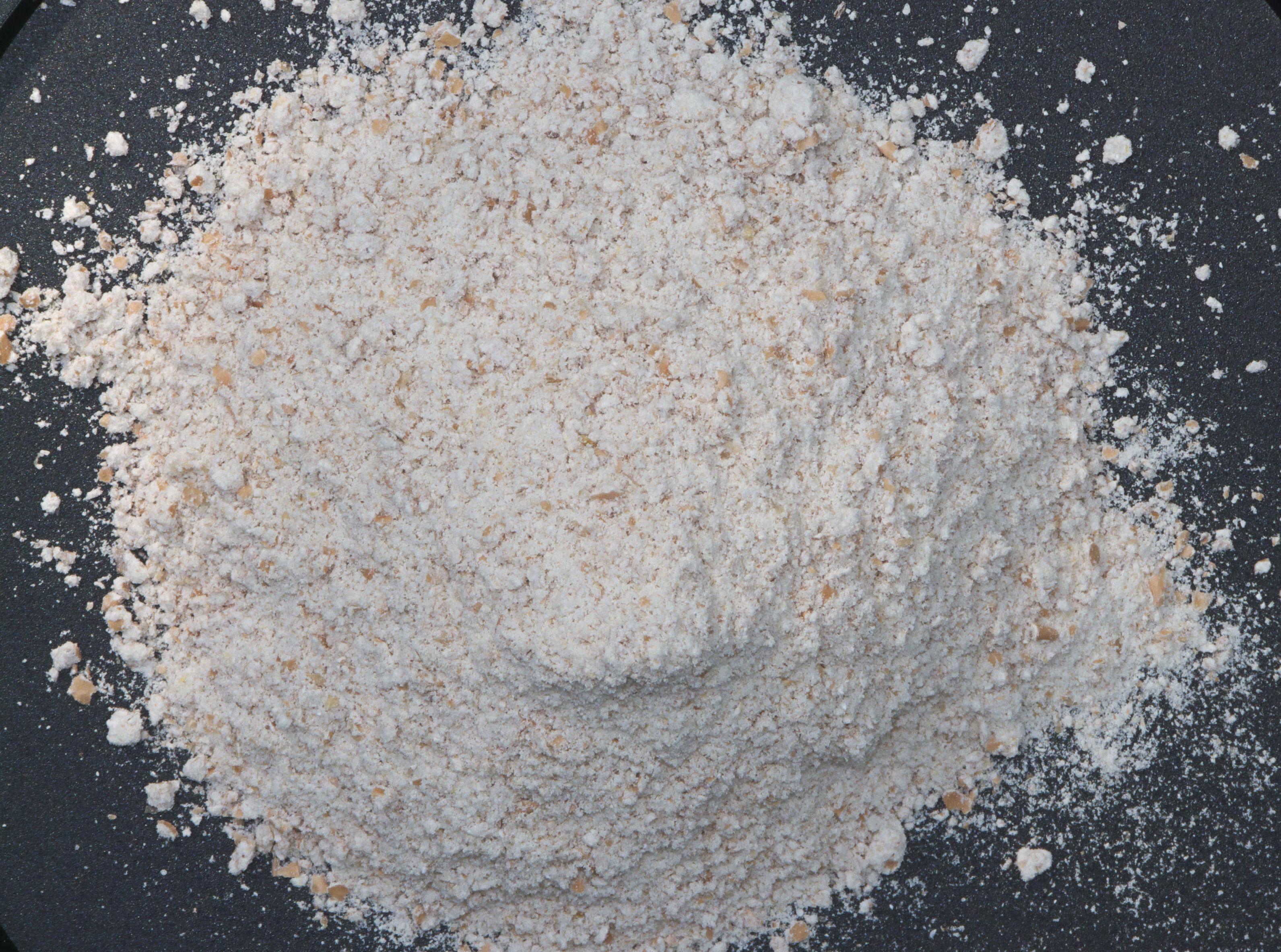
Stone-milled whole grain flour retains the bran and germ fractions removed during roller milling. This preserves oils, fibre, and micronutrients but shortens shelf life — whole grain flours are typically stored refrigerated or frozen.
A small but active network of artisan flour mills operates across Canada, from Speerville Flour Mill in New Brunswick to Flourist in British Columbia. These operations typically use stone or impact mills, source grain from identifiable farms within 200–400 km, and release flour in small batches tied to specific harvests. The Canada Grain Act provides the regulatory framework, while the Canadian Grain Commission maintains variety registration and quality data for heritage wheats.
Roller milling, standardized in the late 19th century, separates the endosperm from bran and germ at high temperatures, producing white flour with extended shelf life. Stone milling grinds the whole kernel slowly at lower temperatures, preserving more of the original grain's nutritional profile. The trade-offs between the two methods — shelf stability, flavour, protein structure, and digestibility — are examined in detail in the milling article.
Read the Milling Article